Boston, MA Neighborhood Guide for Young Professionals: Walkable Living, Condos, and MBTA Commutes
Explore Boston, MA’s walkable urban-village vibe: 4 MBTA lines, 25% walk commuters, Seaport nightlife, brownstone condos, and car-light commutes.
Written ByBen Resnicow
PublishedMay 27, 2026
Commonwealth Standard Realty Advisors is a Newton, MA brokerage serving Greater Boston. Honest, full-service representation for buyers, sellers & investors. Serving Newton, Lexington, Boston, Needham, Cambridge, Sudbury, Dedham, Watertown, Wellesley, Somerville, Melrose, Natick, Arlington, Milton and Brookline, MA.
Boston, MA
Region
In July 2026, the median sale price for homes in Boston, MA was $879,500, up 7.3% from a year earlier.
Boston is one of those rare American cities where you can sell your car the day you sign your lease and genuinely never miss it. For young professionals juggling demanding jobs in the Financial District, lab work in Kendall Square, or startup hours in the Seaport, the city's compact footprint, dense transit network, and tightly clustered nightlife make it feel less like a sprawling metro and more like a string of walkable urban villages stitched together by the T. What follows is a breakdown of the vibe, the housing stock, the social hubs, and the commute logistics worth knowing before you sign a lease or make an offer.
What is the vibe like living in Boston, MA as a young professional?
Boston's vibe is fast-paced, intellectually charged, and deeply walkable — a city where 17th-century cobblestones share a block with biotech labs and rooftop bars. It's authoritative without being pretentious, and it rewards people who are ambitious about their careers but still want a beer at a corner pub by 6 PM.
The daytime energy comes straight from the city's economic engines: healthcare, higher education, technology, finance, and biotech. With roughly 500,000 people working across higher education and healthcare alone, and a metro-area workforce of about 2.8 million, lunchtime sidewalks in the Financial District or near Longwood feel genuinely electric. The local unemployment rate hovered around 2.9% in the most recent BLS metro report, well below the national 4.1% average — which keeps competition for talent, and for desirable apartments, fierce.
What surprises most newcomers transplanting from New York or D.C. is how quickly Boston shifts gears. By early evening, the suit-and-blazer crowd has migrated to Seaport rooftops, North End wine bars, and Back Bay patios. The city is compact enough that a happy hour in Post Office Square and a late dinner at Neptune Oyster in the North End can happen on the same Tuesday without ever touching a car.
One caveat I share with every client relocating here: winters are real. Average January snowfall is about 13 inches, with an annual total near 49 inches — and the historic 2014–2015 winter dumped 110 inches. Good boots and a building with elevator access matter more here than they might in milder cities.
What types of condos and townhomes are common in Boston, MA?
Boston's housing stock for young professionals is dominated by two property types: classic 19th-century brownstone condos and modern glass-and-steel high-rise condominiums. Single-family homes inside the city core are rare and expensive, so most under-40 buyers and renters end up choosing between a converted historic walk-up and a full-service tower.
Here's the architectural mix I walk clients through:
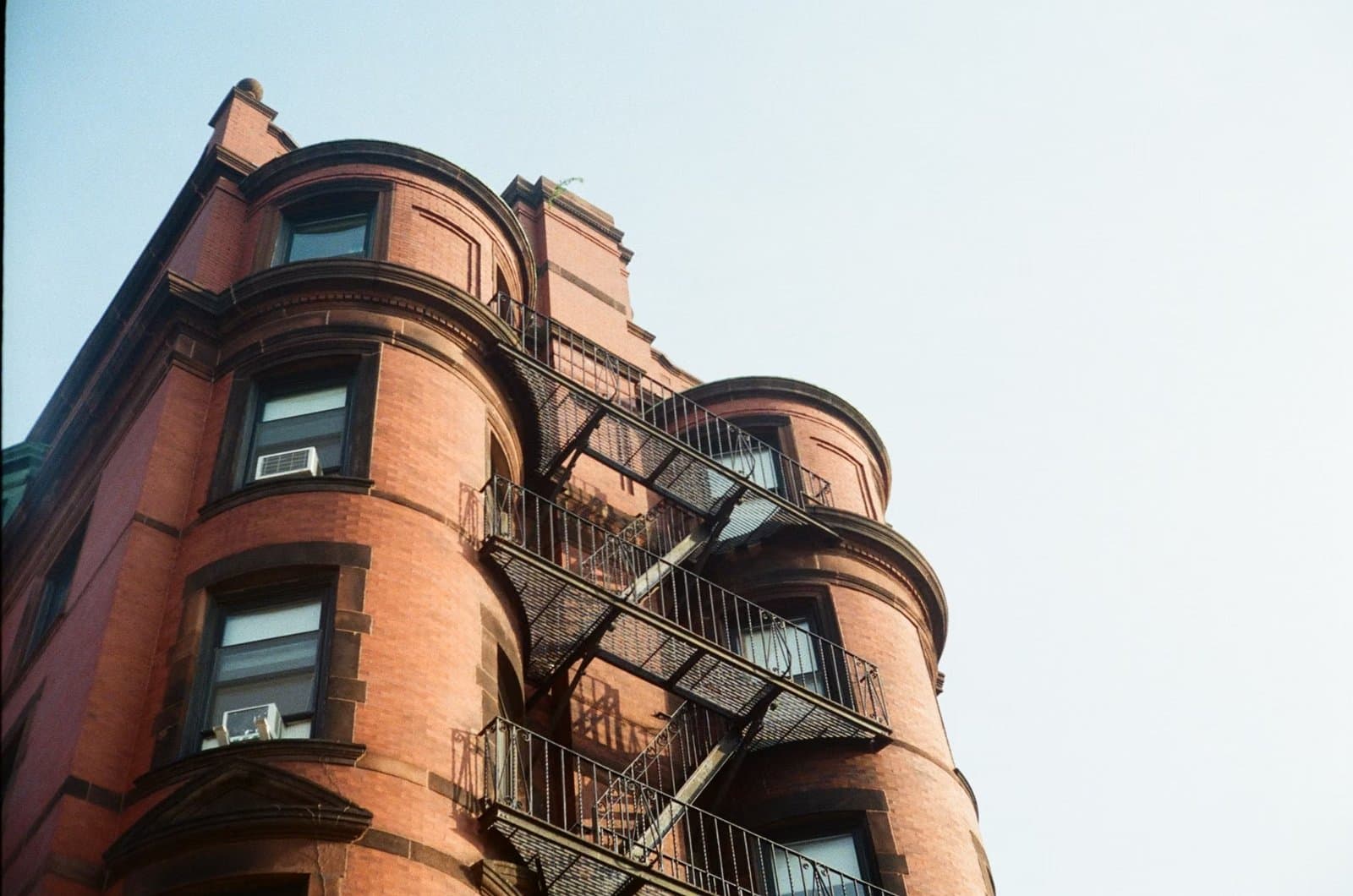
•Victorian and Federal-style brownstones — the iconic bay-windowed rowhouses of Back Bay, Beacon Hill, and the South End. Most have been carved into 2–6 unit condo associations. Expect original moldings, decorative fireplaces, and the occasional stubborn radiator.
•Triple-deckers — the workhorse of neighborhoods like Dorchester, Jamaica Plain, and parts of South Boston. These three-family wood-frame buildings are often condo-converted or held as multifamily investments, with Dorchester triple-deckers currently trading in the $900,000 to $1,400,000 range.
•Modern high-rises — concentrated in the Seaport, Back Bay, and along the waterfront. Think concierge, gym, roof deck, and floor-to-ceiling glass. Seaport one-bedrooms typically start around $3,000/month to rent or $800,000 to buy, with premium units crossing $5,000,000.
Lot sizes inside the city are tight. Most condo buildings sit on parcels under 3,000 square feet, with living space stacked vertically. That's exactly why shared amenities — gyms, roof decks, package rooms, bike storage — carry so much weight in younger buyers' decisions.
The median single-family price in Boston now sits at $857,000, and the average home value across the city runs around $779,777. But condos are where most young professionals actually transact, and pricing varies sharply by neighborhood:
Commuter-Friendly Neighborhood Price Guide
A compact price guide for transit-friendly neighborhoods popular with young professionals comparing rent-versus-buy options.
One financial detail I never let clients overlook: condo fees. The citywide average monthly fee sits around $347, but increases are accelerating in the neighborhoods young professionals love most. Back Bay condo fees have been rising about 8.6% per year on average, South End around 9%, Fenway-Kenmore 7.5%, and East Boston 7%. Always underwrite for a fee increase when comparing two buildings — a beautiful unit with a fragile reserve fund is a financial trap.
On the tax side, Boston is more reasonable than most Northeast peers. The residential property tax rate is $10.58 per $1,000 of assessed value (roughly $10,580/year on a $1M home), and owner-occupants get a $3,500/year residential exemption — a meaningful break versus investor-owners.
2026 Median Home Price Comparison
Shows how Boston pricing stacks up against Greater Boston, statewide, and Worcester benchmarks for buyers evaluating urban access versus affordability.
Shows how Boston pricing stacks up against Greater Boston, statewide, and Worcester benchmarks for buyers evaluating urban access versus affordability.
Where do young professionals hang out in Boston, MA?
Short answer: Boston gathers around its parks, its waterfronts, and a small handful of dense restaurant-and-bar corridors. You don't need to learn all 23 neighborhoods. You need to know the five or six hubs where things actually happen.
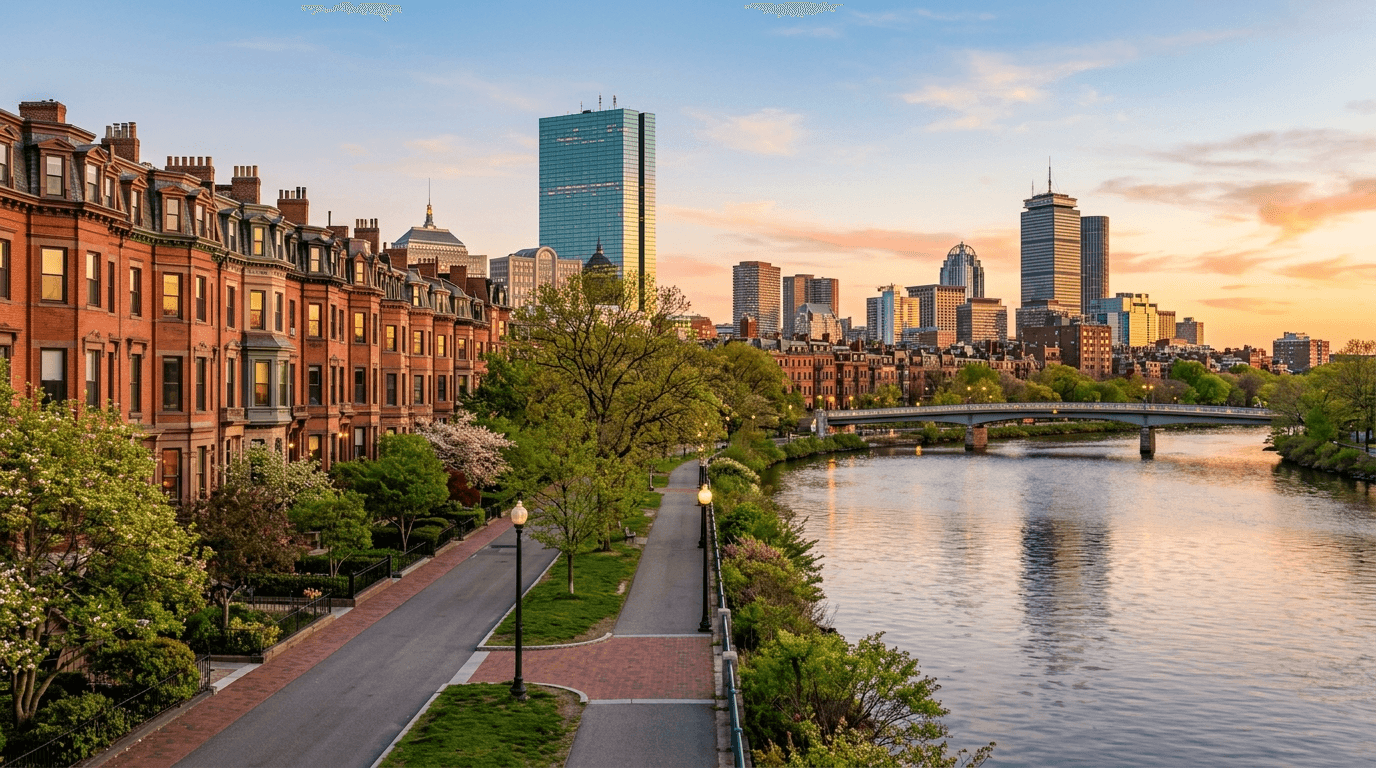
Green space and daily life. Boston Common and the Public Garden are the city's living room. On any spring Saturday, you'll find runners, picnic blankets, and the swan boats gliding across the Garden's lagoon. The Charles River Esplanade is the running and cycling spine of the city — sunset along the Esplanade with the Back Bay skyline behind you is one of the genuine perks of living here. Down on the harbor, Fan Pier Park and Christopher Columbus Waterfront Park anchor the Seaport and North End sides, respectively.
Dining and nightlife. The Seaport District has become the unofficial after-work headquarters for the Financial District and biotech crowd, with rooftop bars, oyster spots, and venues like F1 Arcade Boston pulling a steady weeknight crowd. The North End remains the city's go-to for authentic Italian — a Saturday morning routine for many of my clients is a cannoli from Mike's Pastry followed by a walk along the Greenway. Back Bay's Newbury Street covers the upscale shopping and brunch beat, while the South End owns brunch and design-forward dining.
Markets and "third places." Boston Public Market, Faneuil Hall, and the rotating Haymarket open-air market keep the historic commercial culture alive. For coffee and laptop time, the Tatte Bakery & Cafe footprint across the city — including the One Boston Place location popular with downtown commuters — has effectively replaced the corner Starbucks for much of the professional crowd.
Shopping districts. Prudential Center and Copley Place anchor Back Bay; the Hub on Causeway sits above North Station; and Boston Seaport functions as both a residential neighborhood and an open-air mall.
The key insight: in Boston, your neighborhood often is your social hub. Living near where you want to spend your downtime matters more here than in driving cities, because friends will absolutely choose the bar closer to the Red Line.
How is the commute in Boston, MA on the MBTA?
Boston is genuinely one of the best transit cities in the U.S. for young professionals — most of my clients in their 20s and 30s do not own a car. The MBTA ("the T") runs four heavy rail subway lines, an extensive bus network, Commuter Rail to the suburbs, and ferries, all converging in the downtown core. Roughly 25% of Boston commuters walk at least half a mile as part of their daily routine, which tells you how much of the city is built around moving on foot and on rails.
Here's how the four subway lines map to where you'll likely work:
•Red Line — Cambridge (Harvard, MIT/Kendall Square), Downtown Crossing, South Station, and South Boston/Dorchester. Essential if you work in biotech, tech, or finance.
•Orange Line — Back Bay, Downtown Crossing, North Station, with connections to neighborhoods like Jamaica Plain and Charlestown.
•Green Line — Back Bay, Fenway, Longwood Medical Area, and out through Brookline. The line for hospital workers and Fenway/Kenmore residents.
•Blue Line — Logan Airport, East Boston, and downtown via State and Government Center. The frequent-flyer's line.
Service has been getting materially better, not worse — a real shift from five years ago. The MBTA has hired roughly 1,900 new employees and ramped up scheduled trips significantly:
MBTA Momentum for Daily Commuters
A commuter-first snapshot of MBTA gains most relevant to young professionals weighing daily access, frequency, and reliability across rail and bus service.
2025 Service Delivery
Increase in Scheduled Weekday Trips (Orange Line)18%
Increase in Scheduled Weekday Trips for Red Line10%
Increase in Scheduled Weekday Trips for Blue Line5%
The Orange Line in particular saw an 18% increase in scheduled weekday trips between Winter 2024–2025 and Winter 2025–2026, jumping from 360 to 425 trips per weekday. The Red Line added a 10% increase (406 to 448 trips), and the Blue Line picked up 5%. Dropped trip rates have fallen to just 0.5% — a meaningful reliability improvement.
Scheduled Weekday Trip Growth by MBTA Line
Compares scheduled weekday trip counts before and after service increases, highlighting the lines with the biggest commute-time improvements.
Orange Line
Red Line
Blue Line
Compares scheduled weekday trip counts before and after service increases, highlighting the lines with the biggest commute-time improvements.
•South Station — Red Line, Silver Line, all Commuter Rail south/west routes, and Amtrak (including the Acela to NYC and D.C.). If you travel for work, living within a 15-minute walk of South Station is a serious quality-of-life upgrade.
•North Station — Orange and Green Lines, Commuter Rail north, and TD Garden. A growing residential hub with multiple new towers.
•Back Bay Station — Orange Line, Commuter Rail, and Amtrak. Walkable to most Back Bay and South End apartments.
Bus and bike. The MBTA bus network is being restructured under the Bus Network Redesign, with 21 frequent bus routes now running every 15 minutes or better, and another 3,000 additional weekly service hours added. The April 2026 service changes upgrade Route 16 (Forest Hills–Andrew) to every 15 minutes on weekdays, and Routes 42, 96, and 101 are moving to every-30-minutes-or-better all day. Bluebikes, the city's bike-share system, has stations on nearly every corner of the urban core and is heavily used from April through October.
There's also a major development story tied to transit: more than 5,000 housing units and 10 million square feet of mixed-use space have been built or are planned around T stations over the last decade — from Assembly Row in Somerville (Orange Line) to New Balance's Boston Landing Station in Allston/Brighton, to upcoming projects at Back Bay Station, MIT Kendall Square, and South Station.
Transit-Oriented Development Pipeline
Transit-oriented development is a key part of the commuter lifestyle story: more housing, mixed-use destinations, and future projects clustered near rail stations.
Total Development Area10 million square feet
Total Housing Units5,000+ units
Total TOD Projects in Last 10 Years50
Assembly RowAssembly Station, Somerville
New Balance Boston Landing StationAllston/Brighton
Back Bay Station DevelopmentBoston
MIT Kendall Sq HeadhouseKendall Sq Station, Cambridge
A practical commute tip I give every relocating client: before you sign a lease, do the actual commute at 8:15 AM on a Tuesday. Boston's neighborhoods can look identical on a map, but a Red Line stop on the Cambridge side versus the Dorchester branch can mean a 15-minute difference to your office — and ten more minutes of sleep is the single biggest amenity any young professional can buy in this city.
Boston rewards the people who learn it block by block. The right neighborhood depends on where you work, where you want to spend Saturday night, and how much weight you put on a doorman versus a brownstone stoop. When you're ready to translate those preferences into an actual address, a candid conversation about buildings, condo fees, and commute math will save you months of trial and error.
Is Boston, MA a good place to live for families and young professionals?
Boston, MA is a strong fit for households that prioritize walkability, transit access, parks, and short urban commutes. Boston Common, the Public Garden, the Charles River Esplanade, Fan Pier Park, and Christopher Columbus Waterfront Park provide major outdoor gathering spaces within the city core.
The tradeoff is winter weather. January snowfall averages about 13 inches, and the city sees about 49 inches of snow annually, so elevator access, transit proximity, and practical winter gear matter when choosing a home.
What types of condos and townhomes are common in Boston, MA?
Boston, MA is dominated by classic 19th-century brownstone condos, triple-deckers, and modern high-rise condominiums. Back Bay, Beacon Hill, and the South End are known for Victorian and Federal-style brownstones that are often converted into 2- to 6-unit condo associations.
Triple-deckers are common in neighborhoods such as Dorchester, Jamaica Plain, and parts of South Boston. Modern full-service towers are concentrated in the Seaport, Back Bay, and waterfront areas, often offering concierge service, gyms, roof decks, package rooms, and bike storage.
How much does it cost to buy a condo or home in Boston, MA?
Boston, MA is an expensive housing market, especially in the city core. The median single-family price is about $857,000, while the average home value across the city is around $779,777.
Seaport one-bedroom rentals typically start around $3,000 per month, and one-bedroom purchases often start around $800,000. Premium Seaport units can exceed $5,000,000.
How much are HOA or condo fees in Boston, MA?
Condo fees are an important part of affordability in Boston, MA. The citywide average monthly condo fee is about $347, but fees have been rising quickly in popular neighborhoods.
Back Bay condo fees have been increasing by about 8.6% per year on average, South End fees by about 9%, Fenway-Kenmore by about 7.5%, and East Boston by about 7%. Buyers should compare both the current fee and the building’s reserve strength before choosing a condo.
How is the commute in Boston, MA on the MBTA?
Boston, MA has one of the strongest transit setups in the U.S. for car-light living. The MBTA includes the Red, Orange, Green, and Blue subway lines, an extensive bus network, Commuter Rail, ferries, and major downtown transfer hubs.
The Red Line serves Cambridge, Kendall Square, Downtown Crossing, South Station, South Boston, and Dorchester. The Green Line serves Back Bay, Fenway, Longwood Medical Area, and Brookline, while the Blue Line connects downtown to East Boston and Logan Airport.
Do you need a car to live in Boston, MA?
Many young professionals in Boston, MA do not own a car because the city is compact, walkable, and well served by the MBTA. About 25% of Boston commuters walk at least half a mile as part of their daily commute.
Living near the right T line can be more valuable than having parking. South Station, North Station, and Back Bay Station are especially important hubs for subway, Commuter Rail, Amtrak, and airport or regional travel connections.
What should professionals know about schools, universities, and healthcare jobs in Boston, MA?
Boston, MA is a major education and healthcare employment center. Higher education and healthcare together employ roughly 500,000 people, and the metro-area workforce is about 2.8 million.
For commute planning, the Red Line is important for Cambridge, Harvard, MIT, Kendall Square, and tech or biotech jobs. The Green Line is important for Longwood Medical Area and Fenway-Kenmore residents.