Newton, MA Real Estate Guide for Young Professionals: Villages, Condos & Commutes
Explore Newton’s 13 villages, $1.7M median sold price, Green Line D Branch access, and walkable hubs for young professionals.
Written ByBen Resnicow
PublishedMay 27, 2026
Commonwealth Standard Realty Advisors is a Newton, MA brokerage serving Greater Boston. Honest, full-service representation for buyers, sellers & investors. Serving Newton, Lexington, Boston, Needham, Cambridge, Sudbury, Dedham, Watertown, Wellesley, Somerville, Melrose, Natick, Arlington, Milton and Brookline, MA.
Newton, MA
Region
10
Villages
In July 2026, the median sale price for homes in Newton, MA was $1,597,500, up 2.2% from a year earlier.
Newton isn't one place — it's thirteen. That's the first thing I tell young professionals when they start their search here. This is a city of villages, each with its own pace, price point, and personality, all stitched together by some of the best transit access in Greater Boston. If you want a quiet street with a six-minute walk to a Green Line stop and a 25-minute door-to-door to your office in the Back Bay, Newton is engineered for exactly that lifestyle.
What follows is the working framework I use with clients weighing Newton against Cambridge, Brookline, or staying in the city — broken down by vibe, housing stock, social hubs, and the commute math that actually matters.
Is Newton, MA a Quiet Suburb or a Lively Urban Neighborhood?
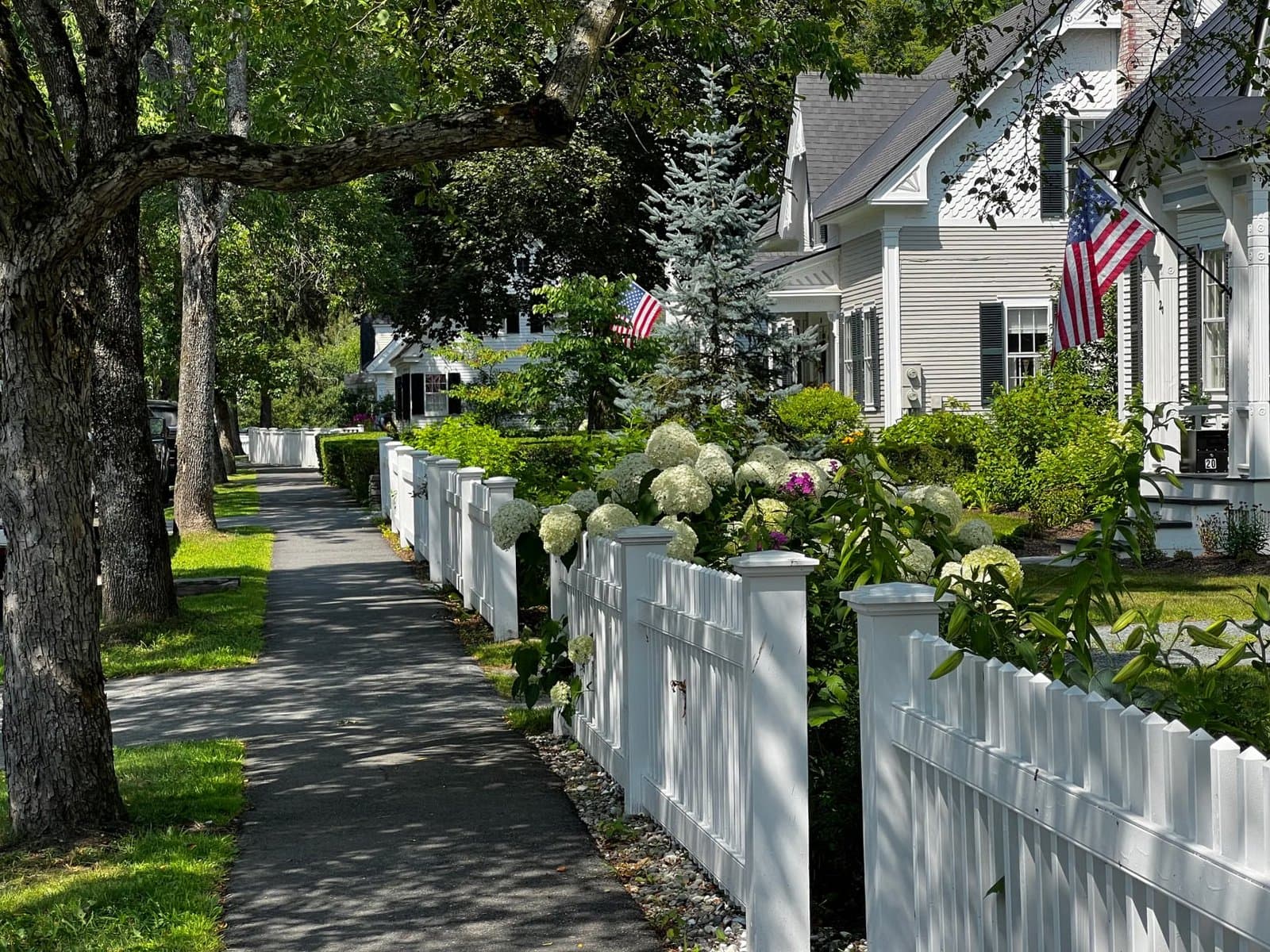
Newton is best described as a "city of villages" — predominantly quiet and residential, but punctuated by walkable commercial squares that feel more like small downtowns than typical suburban strip centers. For young professionals, that combination is the entire pitch.
On any given Tuesday evening, you can walk from a tree-lined side street where the loudest sound is a sprinkler, cross one intersection, and land in a village center with wine bars, a yoga studio, and a coffee shop full of people working on laptops. The city has roughly 88,453 residents, a median household income of $176,373, and an average age of 40. Translation: you're surrounded by other professionals, but the demographic still skews older and more established than, say, Allston or Somerville.
A few expectations worth setting:
•Walkability varies dramatically by village. The citywide Walk Score sits around 29/100, well below the national average of 48/100. That number is misleading, though — it averages quiet residential pockets with very walkable squares. Newton Centre, West Newton, and Newtonville are the genuinely walkable hubs.
•It is safe. The violent crime rate is 0.7 per 1,000 residents versus a national average of 3.6 per 1,000.
•It is not Cambridge. Nightlife is earlier, quieter, and more food-and-wine than bars-and-clubs. Most clients I work with consider that a feature, not a bug.
The honest framing: Newton suits the young professional who has already done the urban thing, or who wants city access without giving up sleep, parking, and a yard (or, at minimum, a private balcony).
What Does the Real Estate Market in Newton, MA Look Like Right Now?
Newton is a premium, fast-moving market. As of May 2026, the median listing price is roughly $1.88M, the median sold price is $1.70M, and homes are going under agreement in a median of just 24 days.
Here's the headline snapshot I share with buyers on their first call:
Newton Market Snapshot: Price, Inventory & Rent
A quick headline view of Newton’s May 2026 housing market for young professionals weighing purchase price, rental costs, and speed of competition.
For context against neighboring markets — and this is the conversation that usually decides whether Newton makes financial sense:
Newton vs. Nearby Markets: Median Sale Price
Newton sits at a premium compared with broader Middlesex County and more affordable nearby options like Framingham, underscoring the cost of its commute-friendly location and village amenities.
Newton sits at a premium compared with broader Middlesex County and more affordable nearby options like Framingham, underscoring the cost of its commute-friendly location and village amenities.
You're paying a clear premium over the broader Middlesex County median (~$800K) and roughly double what you'd pay in Framingham. Cambridge sits at or above Newton on a per-property basis. What that premium buys you is the combination of transit, schools (per-pupil spending of $28,377, student-to-teacher ratio of 11:1), and a residential property tax rate of $9.80 per $1,000 — meaningfully lower than Brookline (1.15%) or Watertown (1.26%) on an effective basis. Over a 10-year hold, that tax differential alone can save $25,000 to $42,000.
What Kinds of Homes Do Young Professionals Actually Buy in Newton, MA?
For the under-40 buyer, the entry points I steer clients toward are almost always condos and townhomes, with the occasional smaller single-family in a more approachable village.
The realistic menu:
•Condos: roughly $500K to $900K for one- and two-bedroom units, often in converted Victorians, Colonial Revivals, or two- and three-family conversions. These are the most accessible entry point into Newton ownership.
•Townhomes and newer attached construction: Typically $900K to $1.5M, often in small boutique developments or converted larger estates. Low-maintenance, modern finishes, and frequently a private outdoor space — balcony, roof deck, or small patio.
•Entry-level single-families: Mostly in Nonantum (~$1.0M median), Newton Upper Falls (avg sale $980K), and parts of Newton Corner ($1.09M recent sale). These are typically older homes — and that matters, because anything built before 1978 triggers lead paint disclosure requirements, and many homes here need $50,000 to $100,000 in deferred maintenance or updating.
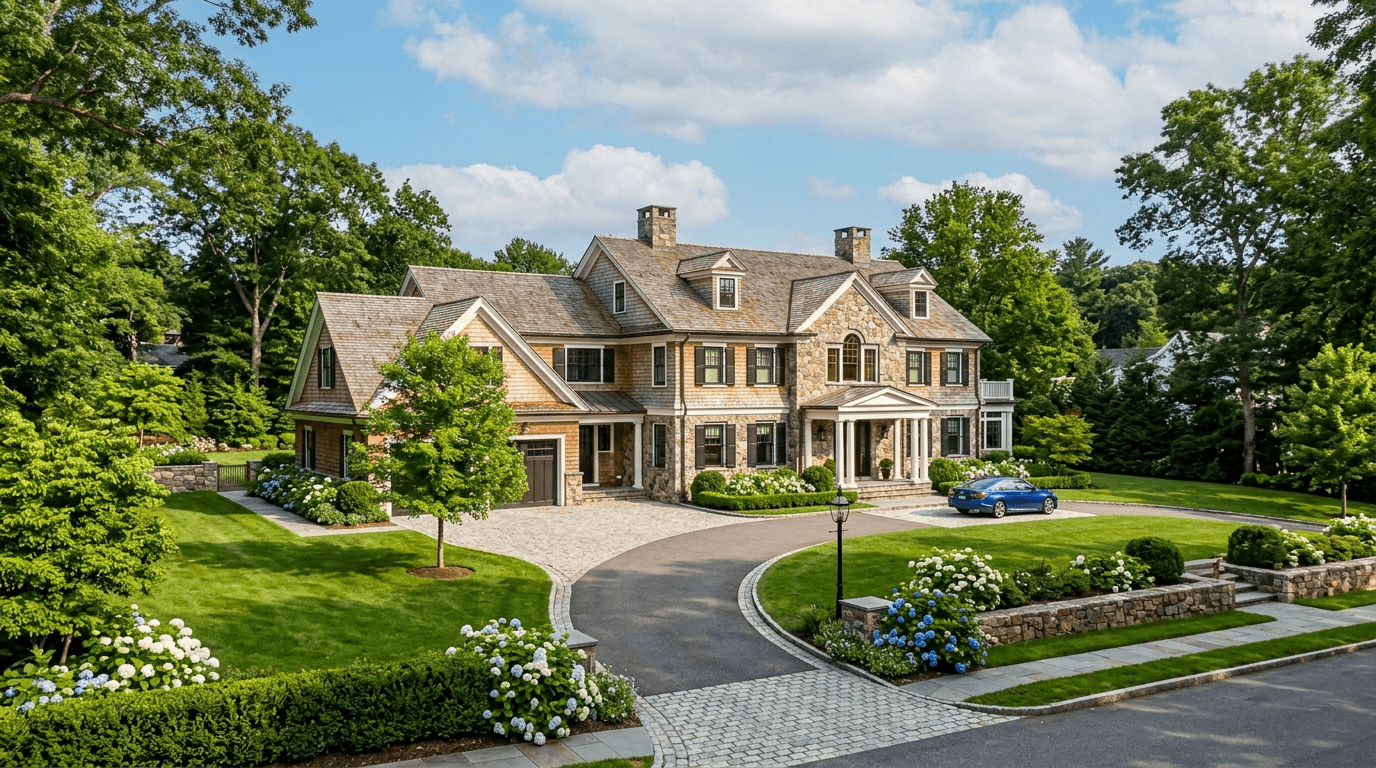
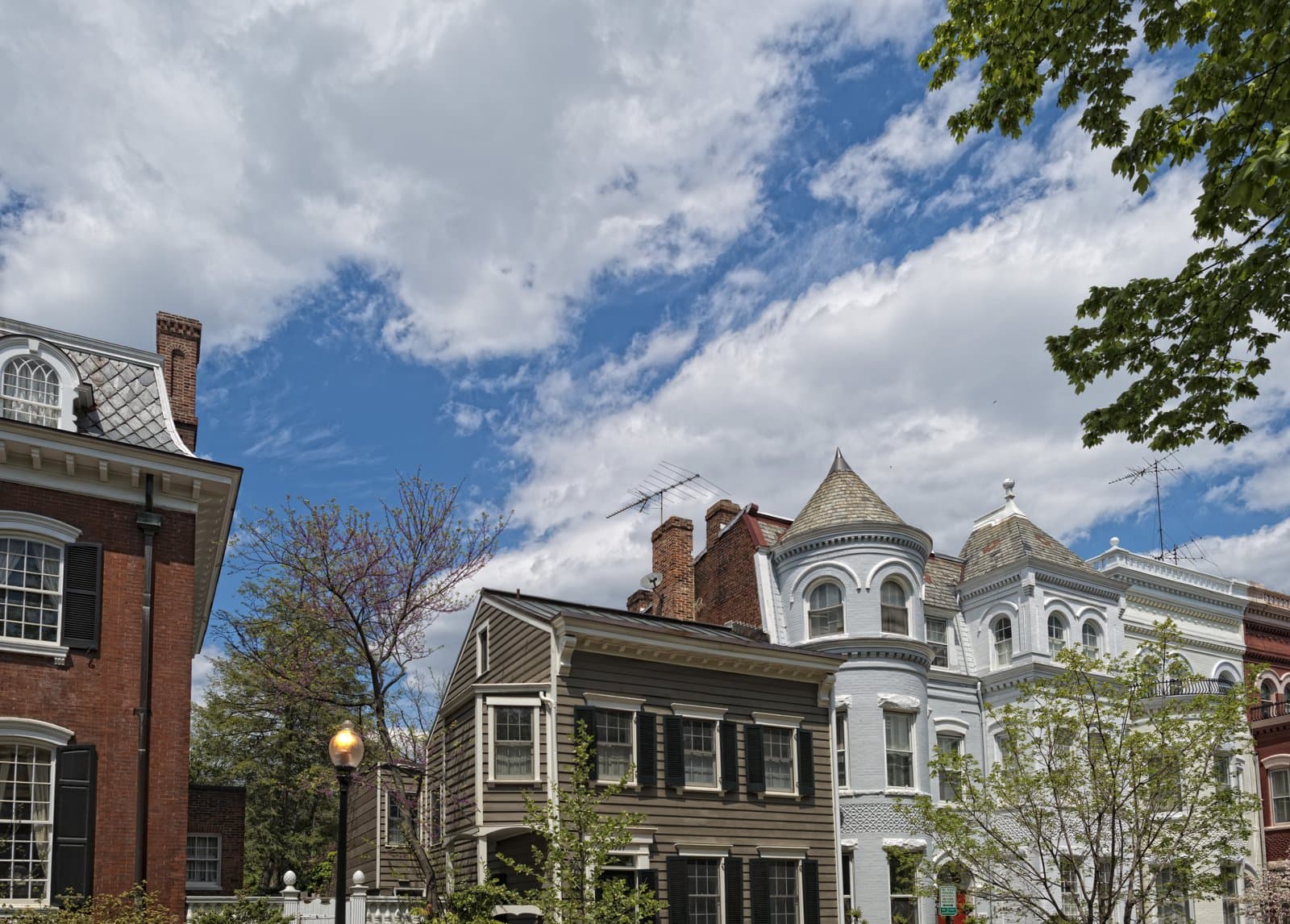
The architectural mix is one of the things I genuinely love about showing property here: Queen Anne Victorians, shingled Colonials, mid-century ranches in Waban and Newton Highlands, and a growing inventory of new-construction townhomes designed specifically for the buyer who wants modern systems without a yard to mow.
What Are the Most Affordable vs. Most Premium Villages in Newton, MA?
Median Listing Prices in Key Newton Villages
A village-by-village price lens helps commuters compare Newton’s most practical residential hubs, from relatively more approachable West Newton and Auburndale to premium Waban and Chestnut Hill.
A village-by-village price lens helps commuters compare Newton’s most practical residential hubs, from relatively more approachable West Newton and Auburndale to premium Waban and Chestnut Hill.
The pattern is consistent: West Newton, Auburndale, and Nonantum offer the most realistic price entry points, while Waban, Newton Centre, and Chestnut Hill sit at the premium end (Chestnut Hill listings median $2,750,000). For a first-time Newton buyer on a professional salary, I typically start the search in West Newton, Auburndale, Newton Upper Falls, or the condo market in Newtonville and Newton Highlands.
A financing reality check is in order. At the January 2026 median single-family price of $1,497,500 with 20% down at the 6.09% 30-year fixed average, estimated monthly PITI runs $8,600 to $8,700. At 10% down, it's closer to $9,500/month. Condos in the $500K–$900K range obviously compress that meaningfully, which is why most young professionals enter through that door first.
Where Do People Actually Hang Out in Newton, MA?
The social and commercial life of Newton concentrates in its village squares — particularly Newton Centre, West Newton, Newtonville, and Chestnut Hill — with Crystal Lake and the Charles River pathway serving as the warm-weather gathering points.
Here's how I describe the rhythm to clients:
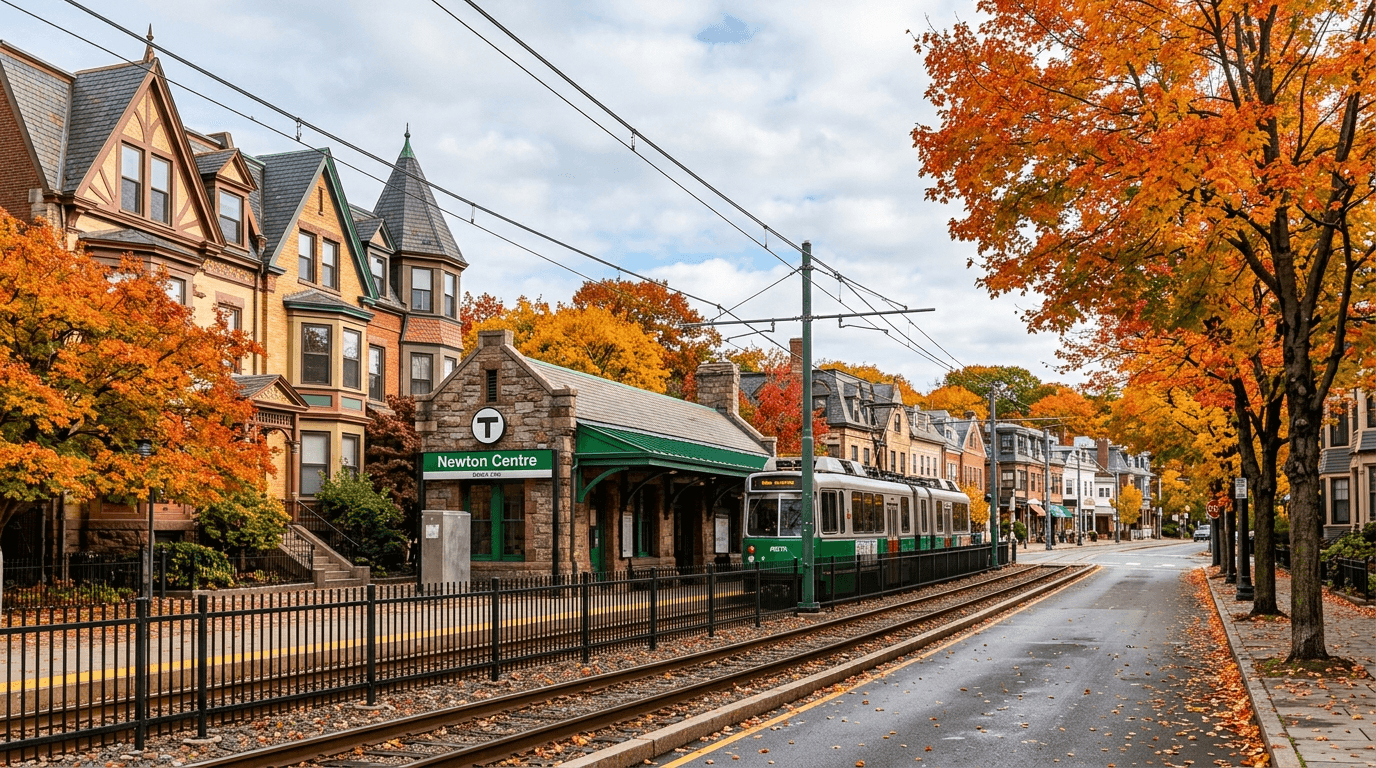
•Newton Centre is the flagship village for the under-40 crowd. Sit-down restaurants, artisanal coffee, boutique shopping, and a Green Line stop at the center of it all. The square wraps around Newton Centre Green and is a five-minute walk to Crystal Lake — genuinely one of the best summer perks in the city.
•Newtonville and West Newton are the more lived-in, less polished squares — great bagels, neighborhood restaurants, and easy commuter rail access. This is where I tend to send clients who want walkability without the Newton Centre price tag.
•The Street Chestnut Hill is the upscale retail and dining option — think curated outdoor shopping district more than traditional village.
•Outdoor anchors: The Charles River pathway for running and cycling, Cold Spring Park for trails and a dog park, and Crystal Lake Beach for swimming in summer.
The walkable village trio — Newton Centre, West Newton, and Newtonville — is where I'd anchor any young professional's search if walkability is a non-negotiable.
How Is the Commute from Newton, MA to Boston and Cambridge?
Newton's commuter infrastructure is the single strongest reason young professionals choose this market. You have three layered options: the MBTA Green Line D Branch, the Framingham/Worcester Commuter Rail, and direct access to both the Mass Pike (I-90) and Route 128/I-95.
The specifics that matter:
•MBTA Green Line (D Branch): Stops at Riverside, Woodland, Waban, Eliot, Newton Highlands, Newton Centre, Chestnut Hill, and Reservoir. This is your one-seat ride to Fenway, Copley, Park Street, and Government Center. Travel time from Newton Centre to downtown Boston runs roughly 25 minutes.
•MBTA Commuter Rail: Auburndale, West Newton, and Newtonville sit on the Framingham/Worcester line, with express service to South Station in 20 to 30 minutes. If you work in the Financial District or Seaport, this is your line.
•Driving: Direct on-ramps to I-90 (Mass Pike) and I-95/Route 128. Light-traffic drives into Boston run 10 to 25 minutes, depending on village and time of day.
The honest caveat: rush hour on Route 9 and the Mass Pike can be brutal. Newton's road network is improving — the city is in the middle of a major repaving program that has lifted the citywide Pavement Condition Index from 62 to 73, with arterials improving from 69.5 to 81.2 — but none of that fixes the volume problem at 5:30 PM. Which is why I push clients toward T-accessible villages whenever budget allows.
$170,000,000Total Estimated Cost of Repair Needs
Newton Roadwork & Sidewalk Improvement Initiative
Newton’s road and sidewalk repair push is a key quality-of-life infrastructure story for commuters, with major repaving targets and a reported pavement condition improvement from 62 to 73.
Mondays are the lightest (average delay 3.8 minutes), Thursdays are the worst (5.3 minutes). It sounds minor on paper. Stack it over a year of commuting, though, and it's a real argument for flexible WFH-on-Thursday arrangements — or for choosing a home within a 7-minute walk of a Green Line or commuter rail stop and skipping the car commute entirely.
Is Newton, MA the Right Fit for You?
The young professionals who thrive in Newton tend to fall into one of two camps: people who've outgrown the city and want quiet without isolation, and dual-income couples planning two to five years ahead — buying a condo or townhome now in a village they'd eventually want to raise kids in.
Earlier in your career, Newton can stretch the budget hard. As a senior associate, a mid-career engineer, or a couple combining two strong incomes, the math gets very reasonable — especially when you weigh Newton's 0.98% effective property tax rate and $28,377 per-pupil school spending against comparable markets.
When clients ask me where to start, I usually suggest spending two Saturdays in the city: one in Newton Centre and Waban (Green Line side), one in West Newton and Newtonville (commuter rail side). Within an hour, you'll feel which side of Newton fits how you actually live. From there, the real work — sharpening the search, reading the market correctly, and writing a competitive offer in a market where 34% of homes sell above list at a 98.5% sale-to-list ratio — is where having a local broker in your corner stops being optional.
Is Newton, MA a good place for families and young professionals?
Newton, MA is a strong fit for people who want a quieter residential setting with access to village centers, transit, parks, and highly funded schools. The city is made up of 13 villages, so daily life can feel very different depending on whether you choose a walkable hub like Newton Centre or a quieter residential pocket.
How are the schools in Newton, MA?
Newton, MA schools are a major part of the city’s appeal. The district has per-pupil spending of $28,377 and a student-to-teacher ratio of 11:1, which are key indicators buyers often consider when comparing Newton with nearby communities.
How much do condos cost in Newton, MA?
Condos in Newton, MA typically range from about $500K to $900K for one- and two-bedroom units. Many are in converted Victorians, Colonial Revivals, or two- and three-family conversions, making them the most accessible ownership option for many young professionals.
Are townhomes a good option in Newton, MA?
Townhomes in Newton, MA typically range from about $900K to $1.5M. Many are newer attached homes, boutique developments, or converted larger estates, often offering modern finishes and private outdoor space such as a balcony, roof deck, or patio.
What are the most affordable areas to buy in Newton, MA?
The most realistic entry points in Newton, MA are generally West Newton, Auburndale, Nonantum, Newton Upper Falls, and parts of the condo market in Newtonville and Newton Highlands. Premium areas include Waban, Newton Centre, and Chestnut Hill, where listings can be significantly higher.
How is the commute from Newton, MA to Boston?
Newton, MA has strong commuter access through the MBTA Green Line D Branch, the Framingham/Worcester Commuter Rail, and direct access to I-90 and I-95/Route 128. Newton Centre to downtown Boston is roughly 25 minutes by Green Line, while commuter rail service from Auburndale, West Newton, and Newtonville can reach South Station in about 20 to 30 minutes.
Is Newton, MA expensive to buy a home in?
Newton, MA is expensive compared with the broader Middlesex County market. As of May 2026, the median listing price is about $1.88M, the median sold price is about $1.70M, and homes go under agreement in a median of 24 days.
Is Newton, MA walkable?
Walkability in Newton, MA depends heavily on the village. The citywide Walk Score is about 29 out of 100, but Newton Centre, West Newton, and Newtonville are the main walkable hubs with restaurants, coffee shops, shopping, and transit access.