Cambridge, MA Real Estate: The Essential Guide for Young Professionals
Explore Cambridge’s high-energy tech/academic vibe: 5 Red Line stops, 90 Walk Score, 96 Bike Score, and condos near Kendall, Harvard & Central.
Written ByBen Resnicow
PublishedMay 27, 2026
Commonwealth Standard Realty Advisors is a Newton, MA brokerage serving Greater Boston. Honest, full-service representation for buyers, sellers & investors. Serving Newton, Lexington, Boston, Needham, Cambridge, Sudbury, Dedham, Watertown, Wellesley, Somerville, Melrose, Natick, Arlington, Milton and Brookline, MA.
Cambridge, MA
Region
In July 2026, the median sale price for homes in Cambridge, MA was $1,045,000, up 1.5% from a year earlier.
Calling Cambridge "across the river from Boston" sells it short. For young professionals in tech, biotech, finance, or academia, it's frequently the better address. With the Red Line running through it, the Charles framing it, and a job market built around Harvard, MIT, and Kendall Square, this is one of the most walkable, opportunity-rich zip codes in the country. Here's an honest local read on what it's actually like to live and buy here.
What is the vibe like in Cambridge, MA for young professionals?
Cambridge has a high-energy, intellectually charged atmosphere that feels closer to a compact European city than a typical Boston suburb. It's busy — but it's purposeful busy, not chaotic.
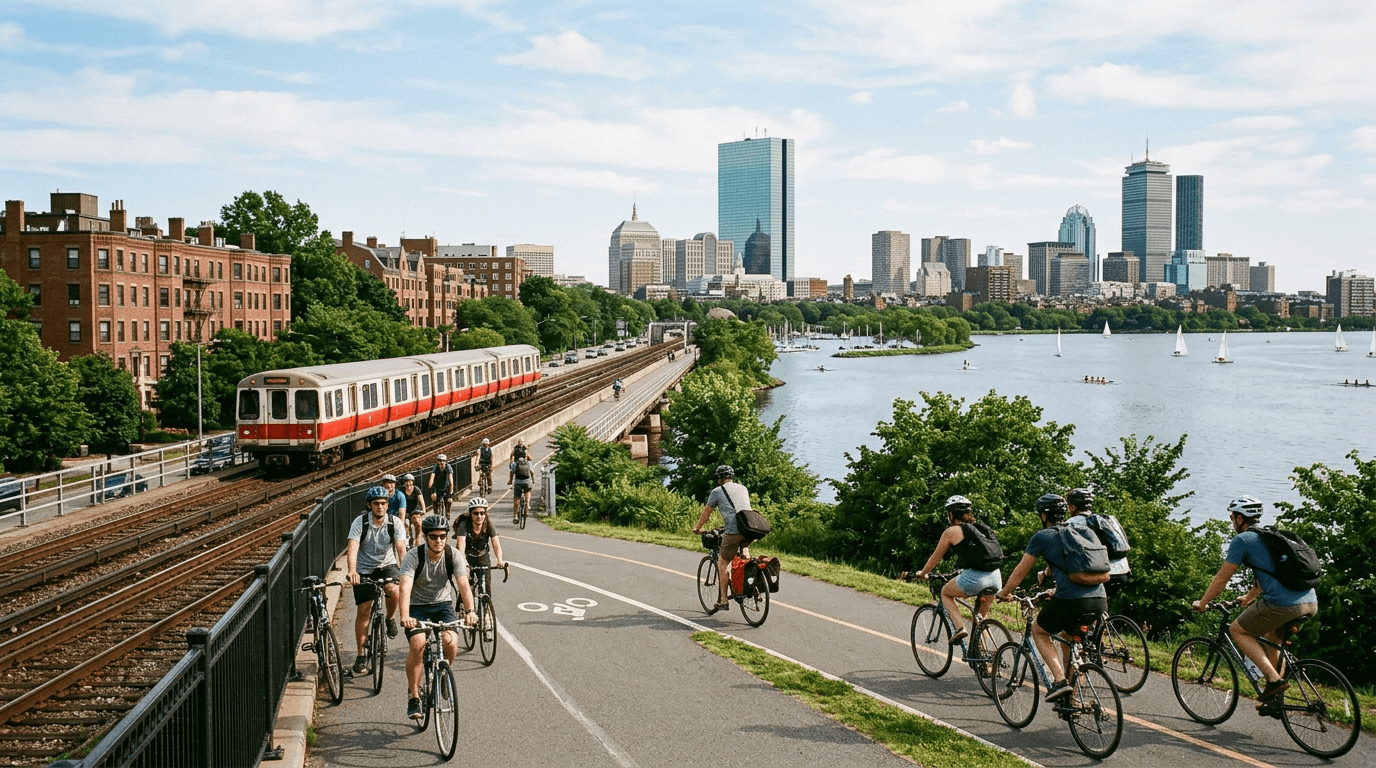
You pick up on it the moment you step off the Red Line: lab coats next to law students, founders pitching at the corner table in a coffee shop, a steady current of cyclists rolling down Mass Ave. The city was settled in 1630 and incorporated in 1846, and that history sits neatly underneath a modern innovation economy. The result? A city that's quiet on the tree-lined residential streets off Brattle and absolutely humming in Kendall and Central.
A few things define the day-to-day:
•Walk-everywhere energy. Groceries, gym, dinner, train — usually within a 10–15 minute radius.
•Real bike culture. Protected lanes, Bluebikes stations, and a citywide commitment to car-light mobility.
•A genuine mix of old and new. A 19th-century triple-decker on one block, a glass biotech tower two blocks later.
When I show condos here to clients relocating from New York or Hartford — and Redfin data confirms that's where most of our new buyers are coming from — the reaction is almost always the same: "I didn't realize how livable this is."
What types of homes are available in Cambridge, MA?
Cambridge's housing stock leans heavily toward condos and townhomes, with classic New England multi-families converted into stacked units and a growing supply of modern luxury developments near Kendall and Alewife. Lot sizes are compact by design — this is a dense, built-out urban city, not a suburb.
For young professionals, that's actually the draw. You're buying location, walkability, and lock-and-leave convenience, not a lawn to mow on Saturdays.
Here's how the market breaks down:
•Converted triple-deckers and rowhouses. Classic brick and clapboard New England architecture, typically chopped into 2–3 condo units. Common in Cambridgeport, Mid-Cambridge, and East Cambridge.
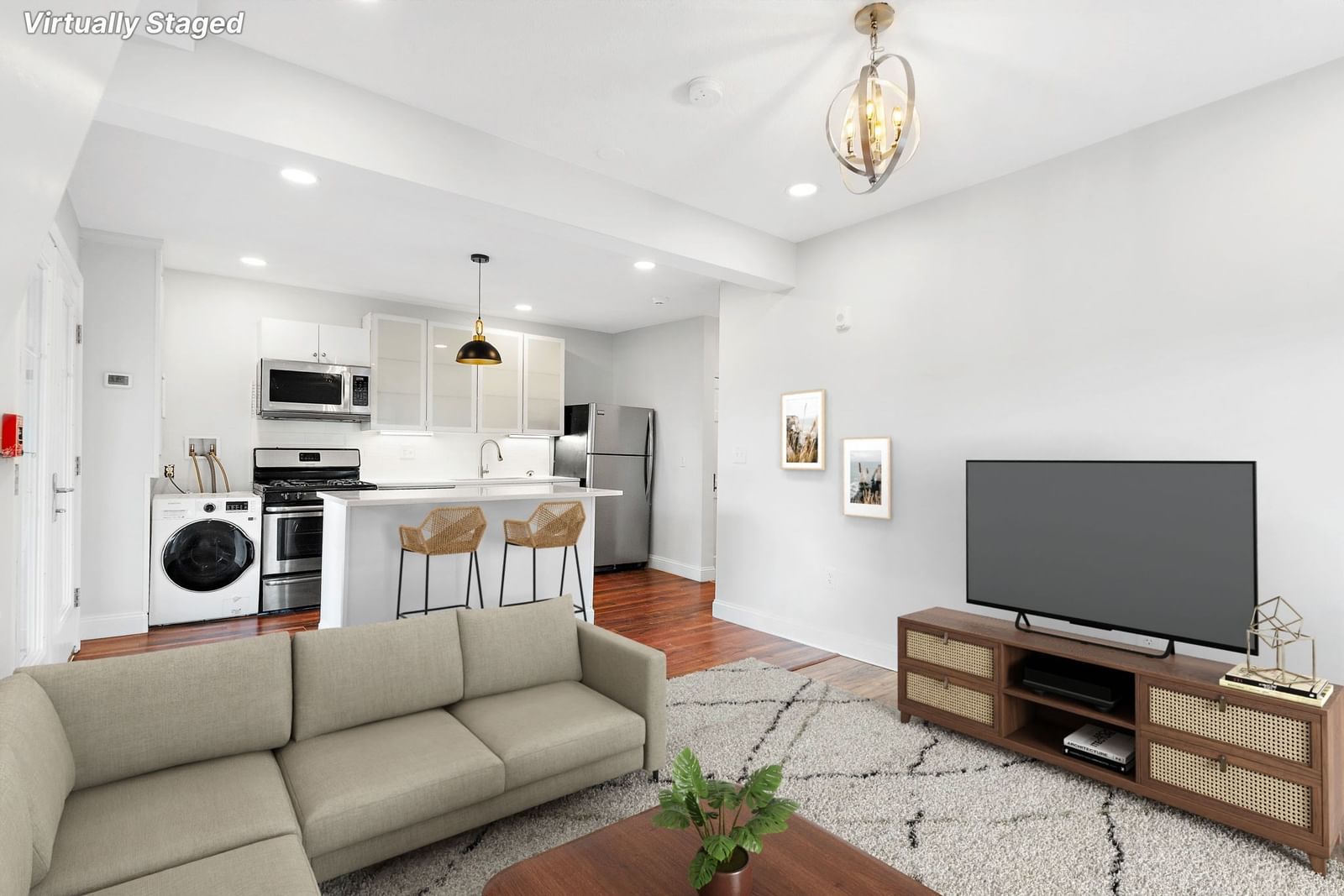
•Modern luxury condos. Glass-and-steel buildings clustered around Kendall Square and Alewife, often with concierge service, gyms, and roof decks.
•Townhomes and small multi-families. Limited supply, but coveted by buyers who want outdoor space without leaving the city.
•Historic single-family homes. They exist (especially around Harvard and West Cambridge), but at a steep premium.
The price gap tells the story. Condos remain the realistic entry point — the YTD 2026 median condo sale price sits around $944,000, while single-family homes have climbed to a median of $2,575,000.
Cambridge Median Sale Prices by Property Type
Median prices show the widening gap between Cambridge condos and single-family homes, reinforcing why condos remain the more realistic entry point for many young professional buyers.
Condominiums
Single Family
Median prices show the widening gap between Cambridge condos and single-family homes, reinforcing why condos remain the more realistic entry point for many young professional buyers.
So what does that mean for a first-time buyer? In my experience working with young professional buyers, 80%+ end up in a condo, and the smart play is usually a 1–2 bedroom in a well-managed association near a Red Line stop. The FY26 residential tax rate of $6.67 per $1,000 of assessed value is also notably lower than many surrounding towns — a quiet financial win that often gets overlooked.
Cambridge Market Snapshot: Spring 2026
A quick read on Cambridge’s current market: high pricing, limited sales volume, and near-list-price outcomes—useful for young professionals timing a purchase in a transit-rich city.
A quick read on that snapshot: with the Mar 2026 sale-to-list ratio at 99.6% and 26.9% of homes still selling above ask, this is a competitive but not frenzied market. Median days on market sit at 40 — enough breathing room to actually think, which wasn't the case two years ago.
Where do young professionals hang out in Cambridge, MA?
The four hubs that anchor social life in Cambridge are Kendall Square, Harvard Square, Central Square, and the Charles River Reservation. Each has its own personality, and most residents cycle through all of them in a typical week.
Kendall Square is the global epicenter of biotech and tech. Moderna, Google, and a hundred startups operate here, and after 5 PM the neighborhood transforms into one of the strongest dining scenes in the metro. If you work in Kendall, you'll quickly learn that lunch at Flour Bakery + Cafe is basically a Cambridge rite of passage.
Harvard Square delivers the iconic Cambridge experience — bookstores, historic architecture, late-night cafes, street performers. It's also home to Harvard Yard , which is genuinely beautiful in every season and a favorite spot to decompress on a Sunday morning with coffee from Tatte Bakery & Cafe .
Central Square is the grittier, more eclectic middle ground — live music venues, global food, breweries, and the densest concentration of young renters in the city. It's where a lot of post-grads land first.
The Charles River Reservation is the outdoor release valve. Running paths, sculling crews on the water at 6 AM, picnics on Magazine Beach in summer — this is the green space that makes urban density livable.
Beyond the squares, neighborhoods like Inman Square and East Cambridge have built their own followings around cafes, breweries, and independent restaurants. The pull is real: 78% of current Cambridge homebuyers are staying in Cambridge. People who land here tend to dig in.
How is the commute from Cambridge, MA to Boston?
Cambridge has one of the strongest commuter profiles in Greater Boston, anchored by five Red Line stations and reinforced by elite walk and bike infrastructure. For young professionals, this is the single biggest lifestyle advantage of choosing Cambridge over the suburbs.
The Red Line is the spine. Five stops sit inside city limits:
•Alewife — northern terminus, with a massive park-and-ride garage for reverse commuters
•Porter Square — also a Commuter Rail stop on the Fitchburg Line
•Harvard Square — the busiest underground station in the system outside of downtown
•Central Square — the everyday workhorse stop for residents
•Kendall/MIT — drops you directly into the biotech corridor, a five-minute walk from the river crossing into Boston
From Kendall/MIT, you're at South Station in about 10 minutes. From Harvard, downtown Boston is roughly 15–20 minutes door-to-door.
Car-Light Living: Cambridge Mobility Scores
Cambridge scores especially well for walking and biking, supporting a car-light lifestyle for commuters who want quick access to work, errands, dining, and transit.
Walk Score90/100
Transit Score70/100
Bike Score96/100
Cambridge scores especially well for walking and biking, supporting a car-light lifestyle for commuters who want quick access to work, errands, dining, and transit.
The scores back up what residents already know: a Walk Score of 90 and a Bike Score of 96 put Cambridge in elite company nationally. That's not marketing fluff — it changes the math on whether you need a car at all. Many of my younger buyers sell their vehicle within the first year of moving here.
The traffic data reinforces why transit matters so much in this market.
Boston Metro Traffic Change by City
Traffic has risen across much of the Boston metro, making Cambridge’s walk, bike, and transit access especially valuable for commuters who want alternatives to peak-hour driving.
Traffic has risen across much of the Boston metro, making Cambridge’s walk, bike, and transit access especially valuable for commuters who want alternatives to peak-hour driving.
Cambridge traffic is up 5.1% year-over-year, and that trend isn't reversing. Buying within a 10-minute walk of a Red Line station isn't just convenient — it's a long-term hedge on your commute and your resale value.
Of course, Red Line reliability depends on continued MBTA investment, and that's worth tracking as a homeowner:
$1.08 billionTotal Category Funding
Red and Orange Line Modernization
A major MBTA modernization initiative affecting two core rapid-transit lines. For Cambridge commuters, Red Line reliability and capacity remain central to the daily-work lifestyle equation.
With $1.08 billion committed to Red and Orange Line modernization and 252 new Red Line cars in the pipeline, the infrastructure is being rebuilt for the next generation of riders. That matters when you're underwriting a 7–10 year hold on a Cambridge condo.
The bottom line for young professionals
Cambridge is expensive, competitive, and worth it — if you buy strategically. The right condo, near the right Red Line stop, in a well-managed association, with a clear sense of how long you plan to hold it, is one of the most resilient real estate plays in the Northeast.
If you want a candid walkthrough of which neighborhoods fit your career trajectory, your budget, and your lifestyle — whether that's a Kendall high-rise or a converted triple-decker in Cambridgeport — that's exactly the kind of conversation I have with clients every week. Reach out and let's talk it through before you start touring.
Is Cambridge, MA a good place to live for young professionals and families?
Cambridge, MA works well for people who want an urban, walkable lifestyle rather than a suburban setting. Daily life is built around short trips to groceries, gyms, restaurants, transit, and parks, with quieter residential streets near areas like Brattle and more active districts like Kendall and Central.
What types of condos and townhomes are available in Cambridge, MA?
Cambridge, MA is dominated by condos, townhomes, and converted multi-family buildings. Common options include converted triple-deckers and rowhouses in areas like Cambridgeport, Mid-Cambridge, and East Cambridge, along with modern luxury condos near Kendall Square and Alewife.
How much does it cost to buy a home in Cambridge, MA?
Condos are the most realistic entry point for many buyers in Cambridge, MA. The YTD 2026 median condo sale price is about $944,000, while the median single-family home price is about $2,575,000.
Are HOA fees and condo associations important when buying in Cambridge, MA?
HOA and condo association quality matter in Cambridge, MA because many buyers purchase in stacked condo buildings, converted multi-families, or modern luxury developments. Newer buildings near Kendall Square and Alewife may include amenities such as concierge service, gyms, and roof decks, while smaller associations are common in converted triple-deckers and rowhouses.
How is the commute from Cambridge, MA to Boston?
Cambridge, MA has one of the strongest commuter profiles in Greater Boston, with five Red Line stations: Alewife, Porter Square, Harvard Square, Central Square, and Kendall/MIT. From Kendall/MIT, South Station is about 10 minutes away, and from Harvard Square, downtown Boston is roughly 15–20 minutes door-to-door.
Do you need a car in Cambridge, MA?
Many Cambridge, MA residents can live with limited car use because the city has a Walk Score of 90 and a Bike Score of 96. The Red Line, protected bike infrastructure, Bluebikes stations, and dense neighborhood layout make walking, biking, and transit practical for daily life.
What should families know about schools and education in Cambridge, MA?
Cambridge, MA has a strong academic identity because it is anchored by Harvard and MIT, along with a job market tied to academia, tech, and biotech. Families focused on K–12 schools should verify current school assignments, enrollment rules, and school-specific details as part of the home search.
Is the Cambridge, MA real estate market competitive?
Cambridge, MA is competitive but not as frenzied as it was recently. As of March 2026, the sale-to-list ratio is 99.6%, 26.9% of homes are selling above asking price, and the median days on market is 40.