Watertown, MA Real Estate: The Essential Commuter Guide for Young Professionals
Quiet New England vibe meets Arsenal Yards energy: Watertown condos, 19-day market, Route 71 to Harvard, express buses to Boston.
Written ByBen Resnicow
PublishedMay 27, 2026
Commonwealth Standard Realty Advisors is a Newton, MA brokerage serving Greater Boston. Honest, full-service representation for buyers, sellers & investors. Serving Newton, Lexington, Boston, Needham, Cambridge, Sudbury, Dedham, Watertown, Wellesley, Somerville, Melrose, Natick, Arlington, Milton and Brookline, MA.
Watertown, MA
Region
In July 2026, the median sale price for homes in Watertown, MA was $812,500, down 15.8% from a year earlier.
Watertown sits in that sweet spot just west of Cambridge and north of the Charles River — close enough to bike into Kendall Square on a good morning, far enough away to feel like you actually live somewhere. For young professionals priced out of Cambridge or Brookline who still want a real city commute, this is the answer I point clients toward week after week.
Here's what you should know before you start touring.
What is the vibe like in Watertown, MA for young professionals?
Watertown feels like a quiet New England town that woke up one morning and discovered it had a craft brewery, a Roche Bros., and a lab building going up on the next block. It's the rare close-in suburb in the middle of a genuine transformation, picking up energy without shedding the residential character that made it affordable to begin with.
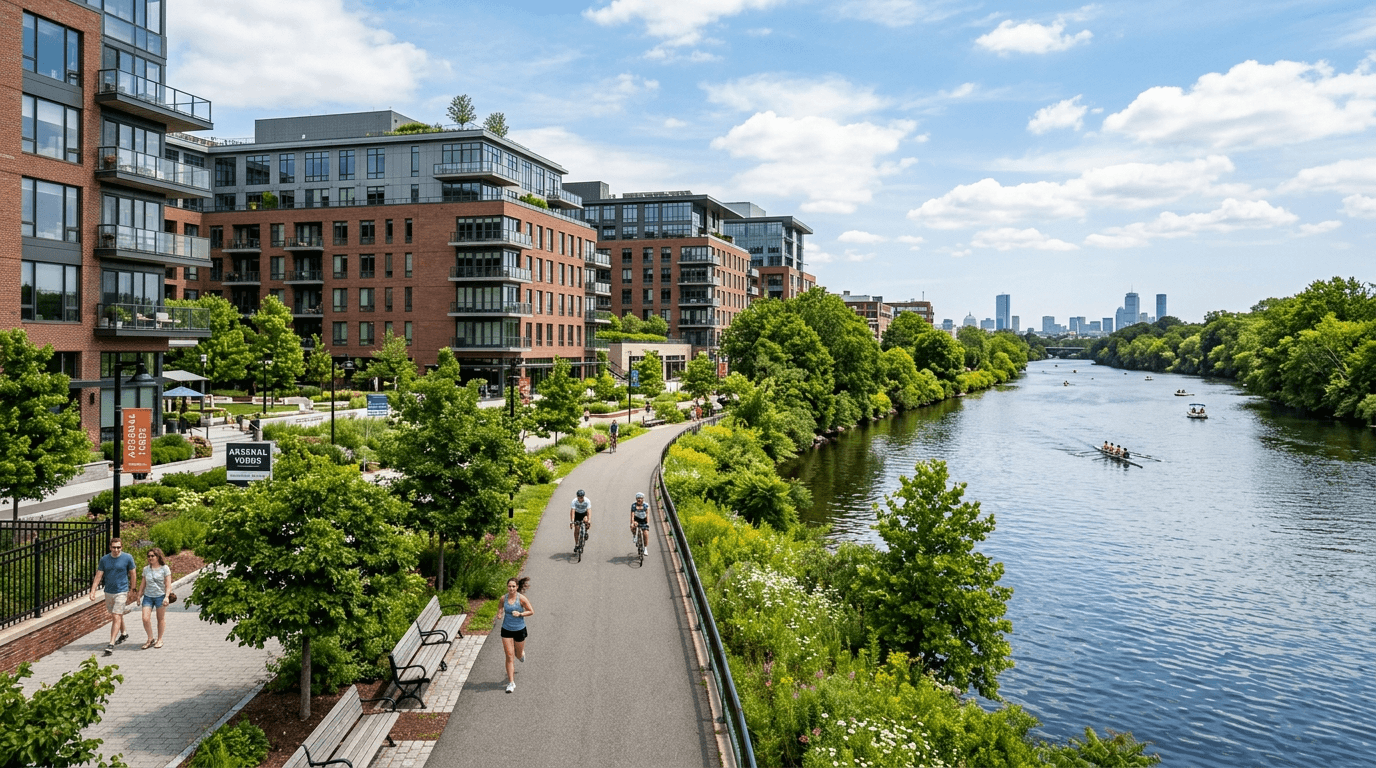
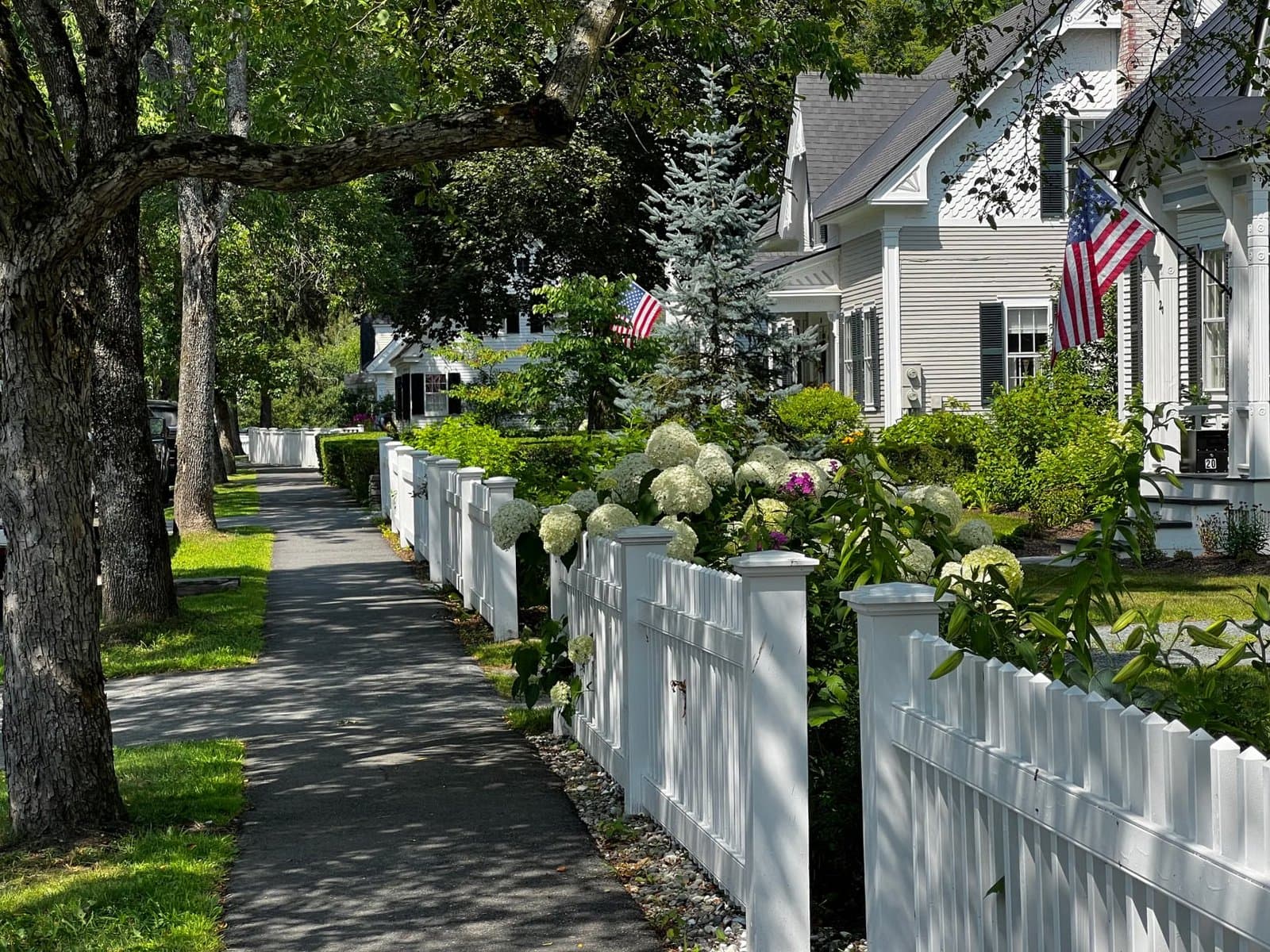
The east side, near the Arsenal corridor, has the buzz — new restaurants, life science employers, walkable retail. Head west toward Waltham or north toward Belmont and the streets quiet down, lined with two-families and tidy front yards. Most of my buyers in their late 20s and 30s tell me the same thing after a Saturday of touring: it feels like a place where you can actually live a full life without driving 40 minutes for groceries or a run.
That balance is the whole pitch. You get a walk to dinner at Bar 'Cino or a morning pastry at Quebrada Baking Company , plus a yard or a balcony, plus a 20-minute bus ride to a downtown Boston desk. That's a tough combination to find inside Route 128.
What types of homes can young professionals actually buy in Watertown, MA?
The Watertown market is dominated by condos and converted two-families, with a very thin layer of single-family inventory on top. For most first-time buyers I work with, the condo segment is where the math actually works.
Here's what the early-2026 numbers look like side by side:
Watertown Entry Point: Condos vs. Single-Family Prices
For buyers prioritizing commute and location, condos offer a meaningfully lower median price point than single-family homes in Watertown’s tight early-2026 market.
Single-Family
Condos
For buyers prioritizing commute and location, condos offer a meaningfully lower median price point than single-family homes in Watertown’s tight early-2026 market.
The median condo sale price is $665,000 versus $987,500 for single-family — a roughly $322K gap that translates directly into buying power. Inventory tells the same story:
Available Watertown Inventory by Property Type
Inventory is concentrated in condos, while single-family supply is extremely limited. This helps explain why young professionals may find more attainable options in the condo segment.
Single-Family
Condos
Inventory is concentrated in condos, while single-family supply is extremely limited. This helps explain why young professionals may find more attainable options in the condo segment.
With only 3 single-family homes on the market against 32 condos in February 2026, the practical reality is that young professionals are buying condos, townhouse-style units, and the occasional half of a two-family.
Architecturally, you're looking at three main flavors:
•Classic New England multi-families — early 1900s two- and three-deckers, often converted into condos with original moldings, hardwoods, and a parking spot or two out back.
•Newer townhome developments — sleek, multi-level units with garages, roof decks, and open-plan kitchens, concentrated near the Arsenal corridor and along Pleasant Street.
•Mid-rise condo buildings — elevator buildings with shared amenities, especially around Watertown Square and the redeveloped industrial parcels.
Lot sizes for the few single-families that do trade tend to be modest. Watertown's zoning caps eave height at 26 feet in most residential districts, and the city's density means you're rarely looking at more than a 5,000–7,000 sq ft lot. That's a feature, not a bug, if you'd rather not spend Saturdays on a riding mower.
Where do people actually gather in Watertown, MA?
The three hubs that come up in every buyer conversation are Arsenal Yards, the Charles River Reservation, and Watertown Square. Each one serves a different part of the week.
Arsenal Yards is the new gravitational center. It's where you'll find the dinner-and-a-movie crowd, the after-work drinks scene, and most of the national retail. The mix of restaurants, a Roche Bros. for groceries, and a boutique cinema makes it the default "let's just walk somewhere" destination for residents on the east side. The redevelopment is also the main reason condo values per square foot are up 6.3% year-over-year while overall median prices have held flat.
The Charles River Reservation is the lifestyle amenity that closes the deal for a lot of young professionals. The paved path runs right through Watertown, connecting you to Cambridge and Boston by bike or on foot. On weekend mornings, the parking lots at Watertown Riverfront Park and Braille Trail fill up with runners and dog walkers before 9 a.m. Combined with gyms like Central Rock Gym and a dense lineup of yoga and boxing studios, the wellness infrastructure here punches well above the town's size.
Watertown Square is the historic commercial focal point — the older retail, the public library, the bus terminus. It's less polished than Arsenal Yards, but it's where you handle the actual business of living: bank, post office, takeout, hardware store.
What is the commute from Watertown, MA to Boston and Cambridge actually like?
Watertown doesn't have a subway stop, but the bus network into Cambridge and downtown Boston is one of the most underrated commuter assets in Greater Boston. For young professionals working in Kendall Square, Back Bay, or the Financial District, the daily ride is genuinely manageable.
Here's the practical breakdown I give clients:
•Route 71 — runs Mount Auburn Street to Harvard Square. From Harvard, you're on the Red Line to Kendall, MIT, or downtown. This is the workhorse for anyone in tech, biotech, or anything Cambridge-adjacent.
•Route 504 (express) — Watertown Yard to Downtown Boston via the Mass Pike. Fast, direct, and the reason plenty of Financial District professionals are willing to live this far west.
•Route 502 (express) — Watertown Yard to Copley Square, hitting Back Bay along the way.
•Routes 57 and 70 — additional Cambridge and Boston connections for off-peak coverage.
For drivers, the Mass Pike (I-90) on-ramp at Newton Corner is about 5 minutes south, and Storrow Drive is a straight shot down Soldiers Field Road. I tell clients to budget 20–35 minutes door-to-door to most downtown offices outside of true rush hour.
Watertown also runs commuter incentive programs worth knowing about if you're going to rely on transit:
$25 gift cardReward Value
Watertown Commuter Incentive Programs
Watertown’s commuter incentive programs add practical value for residents planning to rely on transit, with MBTA pass support and rewards for sustained greener commuting habits.
The free two-month MBTA pass through the T for 2 program is a real thing — eligible commuters who agree to ride at least two days per week get a pass to try it out, and the Go Green Reward kicks back a $25 gift card after 20 trips over three months. Small dollars, but it tells you something about how seriously the town takes its commuter identity.
How competitive is the Watertown, MA housing market right now?
It's a seller's market, but a more reasonable one than it was a year ago. Homes are still moving fast and most are still drawing multiple offers — but buyers finally have a few more days to think.
Headline Watertown indicators for young professionals weighing a close-in commute: prices remain near the million-dollar mark, but homes are still moving quickly and averaging multiple offers.
The headline numbers as of March 2026: median sale price of $967K, 19 days on market, and an average of 3 offers per listing. Price per square foot is up 6.3% year-over-year even as the overall median has held essentially flat — a sign that smaller, more efficient units (read: the condos young professionals are buying) are leading the appreciation.
The other thing to watch is the sale-to-list ratio sitting at 100%, which tells you homes are generally selling at asking. That's competitive, but it's not the 105–110% over-asking madness of 2021–2022. Come in prepared, with a strong pre-approval and a clean offer, and you can win without overpaying.
Which Watertown, MA neighborhoods move fastest?
Speed varies more by neighborhood than most buyers expect, and it's the single best signal of where competition is heating up. Here's how the surrounding submarkets stack up:
Median Days on Market by Watertown-Area Neighborhood
A neighborhood-by-neighborhood look at market speed around Watertown. Nonantum and Waverley Square show the shortest median time on market, signaling especially competitive conditions for commute-friendly buyers.
Nonantum
Waverley Square
East Watertown
Watertown West End
Cushing Square
Newton Corner
Oak Square
A neighborhood-by-neighborhood look at market speed around Watertown. Nonantum and Waverley Square show the shortest median time on market, signaling especially competitive conditions for commute-friendly buyers.
A few things jump out when I review this with clients:
•Nonantum (12 days) and Waverley Square (13 days) are the fastest-moving pockets in the area. Both have seen huge year-over-year drops in time on market, which usually means well-priced inventory is getting snapped up almost immediately.
•East Watertown and Watertown West End, both at 19 days, are the core of the Watertown market itself — competitive but workable.
•Cushing Square, Newton Corner, and Oak Square run a bit slower (22–28 days), which often makes them better hunting grounds for buyers who want a little negotiating room without giving up location.
If you're targeting Nonantum or Waverley Square, you need to be ready to tour the day a listing hits and have your financing tight. If you're flexible on neighborhood, the slightly slower pockets are where I'd start.
What should a young professional do next?
If Watertown is on your shortlist, the practical sequence is straightforward: get fully underwritten pre-approval (not just pre-qualified), pick two or three target neighborhoods based on your commute, and be ready to tour within 24–48 hours of a new listing. With condo inventory sitting around 32 units at any given time and median time-on-market under three weeks, the buyers who win here are the ones who've done the prep work before they walk into their first open house.
Watertown's appeal isn't going anywhere — the commute, the river, the Arsenal Yards momentum, the condo inventory that actually makes the numbers work. The market is competitive, but it's a market you can win with the right plan.
Is Watertown, MA a good place to live for young professionals?
Watertown, MA works well for young professionals who want a quieter residential setting without giving up access to restaurants, groceries, fitness options, and a manageable commute. The east side near the Arsenal corridor has more energy, while areas farther west toward Waltham or north toward Belmont are quieter and more residential.
What types of homes can young professionals buy in Watertown, MA?
Most young professionals buying in Watertown, MA focus on condos, townhouse-style units, and converted two-family homes. The market has far more condo inventory than single-family inventory, with 32 condos on the market compared with only 3 single-family homes in February 2026.
Are condos in Watertown, MA more affordable than single-family homes?
Condos are typically the more affordable entry point in Watertown, MA. The median condo sale price is $665,000, compared with $987,500 for single-family homes, creating a gap of roughly $322,000.
How is the commute from Watertown, MA to Boston and Cambridge?
Watertown, MA does not have a subway stop, but it has strong bus connections to Cambridge and Boston. Route 71 runs to Harvard Square, Route 504 provides express service to Downtown Boston, Route 502 connects to Copley Square and Back Bay, and Routes 57 and 70 add more Cambridge and Boston coverage.
How competitive is the Watertown, MA real estate market?
Watertown, MA is a seller’s market, but conditions are more manageable than during the peak bidding years. As of March 2026, the median sale price is $967,000, homes spend about 19 days on market, and listings receive an average of 3 offers.
Where do residents spend time in Watertown, MA?
The main gathering areas in Watertown, MA are Arsenal Yards, the Charles River Reservation, and Watertown Square. Arsenal Yards offers restaurants, groceries, retail, and a boutique cinema; the Charles River Reservation is popular for running, biking, walking, and dog walking; and Watertown Square serves as the historic commercial center with everyday services.
What should families know about schools and daily living in Watertown, MA?
School-specific ratings, boundaries, and enrollment details are not included here, so buyers should verify school information directly with the appropriate local school resources before making a decision. For family living considerations, Watertown, MA offers residential streets, modest lot sizes, parks and river access, grocery options, and everyday services within close reach.